
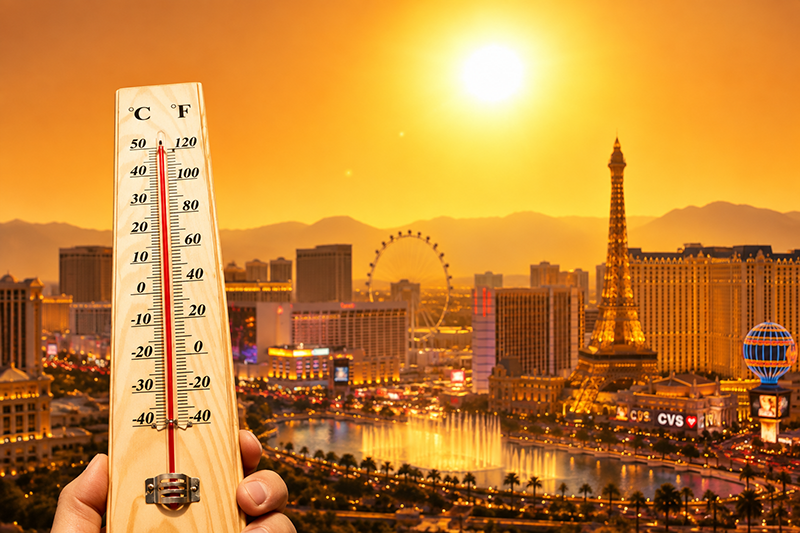
Las Vegas is famous for casinos, entertainment and bright lights, but people who actually live in the Las Vegas Valley experience a very different side of the city. They live in a desert where sunshine is abundant and summer temperatures regularly climb into the triple digits. The National Weather Service describes Las Vegas summers as extremely hot, with triple-digit temperatures being common.
For the Las Vegas real estate market, that climate can work in two directions. Some homebuyers love the dry weather, sunshine, and lack of harsh winters. Others visit during the middle of summer and quickly realize that living in the desert requires a major adjustment.
Simply put, the Las Vegas heat is not for the weak.
Las Vegas Still Attracts Out-of-State Homebuyers
Las Vegas remains attractive to people relocating from other states, especially the West Coast. Realtor.com reported that during the first quarter of 2026, more than 57% of views on Las Vegas listings came from outside Nevada. About one-third of those out-of-state views came from California.
There are several reasons people consider moving to the area. Las Vegas can offer relative affordability compared with some other major Western cities; Nevada has no state individual income tax, and buyers can choose from communities throughout the valley.
Weather can be another attraction. People who dislike snow, freezing temperatures, and long winters may find the Las Vegas climate appealing. Sunshine dominates much of the year, while spring and fall can bring particularly pleasant conditions.
But enjoying a warm February afternoon in Las Vegas is very different from experiencing the city in July.
The Summer Heat Can Change a Buyer’s Mind
Anyone considering Las Vegas real estate should understand what summer actually feels like before buying a home. July is historically the hottest month, with average highs around 105°F, and most July days reach at least 100°F. That can dramatically change daily routines.
Walking the dog, exercising, working in the yard or simply spending time outside may need to happen early in the morning or later in the evening. Cars parked outside become extremely hot, and a backyard that looks inviting during a winter home showing may receive much less use during the hottest part of summer.
For buyers relocating from Southern California or cooler parts of the country, experiencing a Las Vegas summer before purchasing can provide a much clearer picture of what year-round life will actually be like.
For Some Buyers, the Heat Is a Benefit
Not everyone sees extreme heat as a deal breaker. Some people would rather deal with intense summer temperatures than snow, ice, and freezing winter conditions. Las Vegas homes are also designed around desert living, making air conditioning one of the most important parts of everyday life.
The dry climate and abundant sunshine can also appeal to buyers who enjoy pools, desert landscapes, and mild winters.
In that sense, the weather acts almost like a filter. Buyers who enjoy desert living may become even more interested in Las Vegas, while people who struggle with extreme heat may decide another city is a better fit.
Air Conditioning Becomes Part of the Real Estate Decision
In many parts of the country, buyers might focus heavily on the kitchen, flooring or backyard. In Las Vegas, the air-conditioning system deserves just as much attention.
Buyers should consider the age and condition of the HVAC system, insulation, windows, sun exposure, and overall energy efficiency of a property. A large home with an older cooling system may cost considerably more to keep comfortable during the summer.
Shade can also become an important feature. Covered patios, window coverings, mature landscaping, and garages can make everyday desert living more comfortable.
Extreme heat is not simply a matter of comfort. Redfin’s climate-risk information, using First Street data, currently classifies heat risk in Las Vegas as severe and estimates that 94% of properties face severe heat risk over the next 30 years.
Las Vegas Real Estate Is Showing Signs of Balance
The housing market itself has also become somewhat more favorable for buyers compared with the highly competitive conditions seen during parts of the pandemic-era housing boom.
Redfin reported a median Las Vegas sale price of approximately $450,000 for the three months ending in August 2026, with homes taking around 55 days to sell.
Southern Nevada data reported by Realtor.com also showed the median price of an existing single-family home at $480,000 in July 2026, down from the record $490,000 reached earlier in the summer. The number of homes available without offers had increased compared with the previous year.
That can give buyers more time to evaluate not only the house itself, but how well the property is prepared for desert conditions.
Summer Can Be a Good Time to Test a Las Vegas Home
There may actually be an advantage to shopping for Las Vegas real estate when temperatures are at their worst.
A summer showing gives buyers an opportunity to see whether the air conditioner can comfortably cool the house. Buyers can notice which rooms receive heavy afternoon sunlight, how hot the second floor becomes, whether the garage turns into an oven, and how much usable shade exists around the property.
A house that feels perfect when Las Vegas is 70°F outside may feel completely different when temperatures climb above 105°F. Seeing the property under difficult summer conditions can reveal things that a winter showing cannot.
Desert Living Is Not for Everyone
Las Vegas has plenty to offer homebuyers, from entertainment and employment opportunities to suburban communities and easy access to desert recreation. But the climate should be treated as part of the home-buying decision rather than an afterthought.
Some buyers may experience a Las Vegas summer and decide they love the dry desert lifestyle. Others may discover that months of triple-digit temperatures outweigh the benefits that originally attracted them.
That is why anyone seriously considering Las Vegas real estate should experience the city during both its comfortable months and the peak of summer. Las Vegas can offer sunshine, warm winters, and a distinctive desert lifestyle. But when July arrives, and the thermometer pushes past 100°F day after day, new residents quickly learn one important lesson:
The Las Vegas heat is not for the weak.